
Not every home goes on the market empty. In fact, most don’t. Families are still cooking dinner, kids are still doing homework at the kitchen table, and the closets are still full. Yet buyers walking through that home, or scrolling through its photos, need to picture their own life there, not yours.
That is the challenge of occupied home staging, and it’s one of the services we’re asked about most. We’re Gladys and Elsa, the founders of Investology. Gladys brings more than three decades of architectural experience, and Elsa approaches every property with an industrial engineer’s eye for cost and value. Together, we help homeowners and real estate agents across South Florida get lived-in homes ready to sell or rent, without a full move-out and without a remodeling budget.
What is occupied home staging?
Occupied home staging means preparing and styling a property while the owners or tenants still live in it. Instead of bringing in a full set of rental furniture, as we would for a vacant home, we work mostly with what’s already there.
In practice, that usually means:
- Editing: reducing clutter and personal items so rooms feel larger and calmer.
- Rearranging: rethinking furniture placement to improve flow, light and focal points.
- Refreshing: adding color, new textiles, lighting, plants or a few key accessories where they make the biggest difference.
- Filling gaps: bringing in a limited number of pieces when a room lacks a clear purpose or looks unfinished in photos.
The goal is simple: make the home feel clean, spacious and easy to imagine living in, while you continue to live there until it sells.
Why staging an occupied home matters in South Florida
South Florida buyers and renters are visual and selective. Many first see a property on a phone screen, often while comparing it against dozens of others in Miami, Coral Gables, Aventura or Edgewater. If the photos show crowded counters, dark rooms or a hallway full of shoes, they move on.
Staging helps you:
- Stand out online. Clean, bright, well-composed rooms photograph better, and listing photos are your first showing.
- Show the space, not the stuff. Buyers can judge room sizes, light and layout more easily.
- Highlight what Florida buyers want. Indoor-outdoor living, natural light, balconies, patios and pool areas deserve to be presented, not hidden.
- Support your price. A home that looks cared for gives buyers more confidence and gives your agent a stronger position.
Our step-by-step process for lived-in homes
1. The walkthrough
Every project starts with a visit. We walk the home with you, and often with your agent, room by room. We look at the property the way a buyer would: what draws the eye, what feels tight or dark, and what raises questions. We also listen. You’ll tell us what you need to keep accessible day to day, and we’ll plan around that.
2. A clear plan and budget
Next, we put together a practical plan: what to store or pack early, what to move, which rooms need the most attention and whether any small refresh items are worth the investment. Elsa’s focus here is making sure every dollar goes toward something that will show up in the photos and in the showing.
3. Declutter and pre-pack
This is the step homeowners do the most work on, and the one that makes the biggest difference. Since you’re moving anyway, packing early is a head start rather than extra work. We’ll tell you exactly what should go: personal photos, collections, excess furniture, out-of-season items and anything crowding counters, shelves and closets.
4. Style the key rooms
Then the transformation happens. We rearrange furniture, layer in textiles, adjust lighting and add finishing touches. We focus first on the rooms that matter most to buyers: the living area, the kitchen, the primary bedroom, the main bathroom and any outdoor space.
5. Ready for photos and showings
Finally, we make sure the home is ready for the photographer, and we give you a simple checklist to reset the space quickly before each showing.
Room-by-room priorities
- Living room: Pull furniture away from walls where possible, create a clear conversation area and open sight lines to windows and outdoor views.
- Kitchen: Clear the counters almost completely. Keep one or two styled items, like a bowl of fruit or a plant, and remove magnets, notes and small appliances.
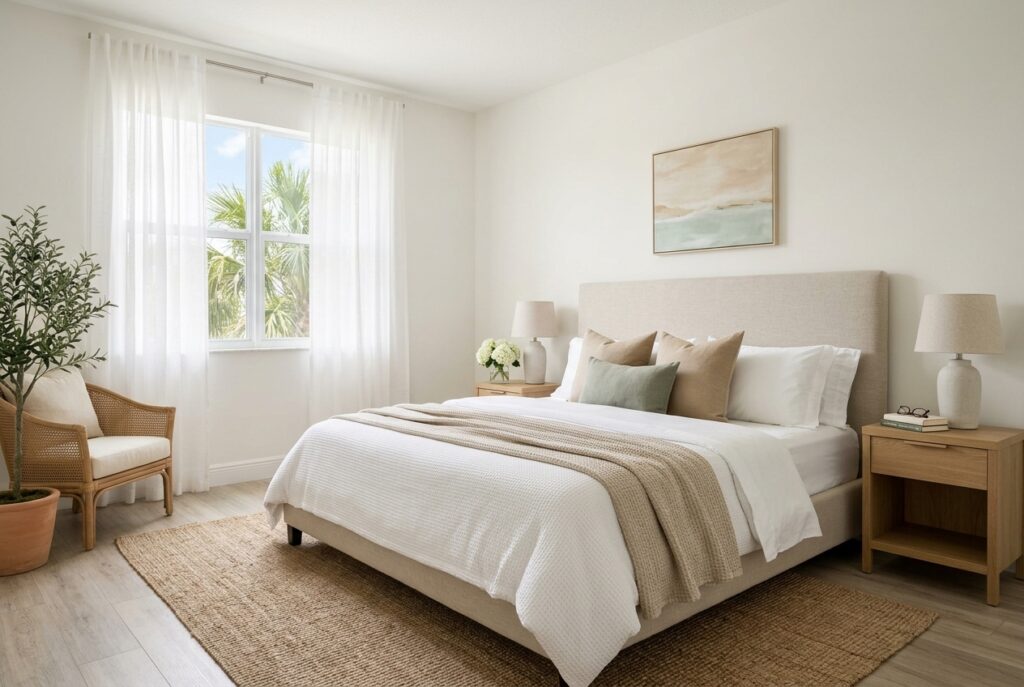
- Primary bedroom: Neutral, crisp bedding, matching lamps, clean nightstands and closets that look half-full rather than packed.
- Bathrooms: Fresh white towels, nothing on the counters except a simple accent, and spotless glass and grout.
- Outdoor spaces: In South Florida, a balcony or patio is part of the living space. Clean it, add simple seating and a plant or two, and show buyers how they’ll use it.
Living in a staged home: practical tips
We know it isn’t easy to live in a home that has to look like a magazine page. These habits help:
- Keep a “showing basket” in each main room to collect everyday items quickly before a visit.
- Use closed storage. Bins in closets and under beds keep daily essentials accessible but out of sight.
- Agree on a 15-minute reset routine with everyone in the household.
- Plan for pets. Have a plan to take pets out during showings, and store bowls, beds and toys.
- Stay flexible. The more available the home is for showings, the more value you’ll get from the staging.
Occupied vs. vacant staging: which is right for you?
If you’re still living in the home, occupied staging is usually the most cost-effective choice, because it works with your existing furniture. Vacant staging, where we furnish an empty property, makes sense when the home is already empty or when the existing furniture works against the space. Many homeowners combine the two: we stage while they’re living there, then add or replace key pieces once they move out. We’re happy to help you decide what fits your timeline and budget.
The bottom line
Occupied staging isn’t about hiding your life. It’s about presenting your home in a way that lets the next owner imagine theirs. With a clear plan, a bit of early packing and a professional eye, a lived-in home can look just as market-ready as a vacant one.
Thinking about selling or renting your South Florida home while you still live in it? Request a free quote and let’s walk through it together.
Frequently Asked Questions
What is occupied home staging?
Occupied home staging is preparing and styling a property for sale or rent while the owners or tenants still live there. It usually involves decluttering, rearranging existing furniture, refreshing the space with color, textiles and lighting, and adding a few pieces only where needed.
Do I have to move out to stage my home?
No. Occupied staging is designed for homes where people still live. We work around your daily routine and give you simple habits to keep the home show-ready.
How long does it take to stage an occupied home?
It depends on the size of the home and how much decluttering is needed. After the initial walkthrough, we’ll give you a clear plan and timeline so the home is ready before photos and the first showings.
Is occupied staging cheaper than vacant staging?
Usually, yes. Because we work mainly with your existing furniture and décor, occupied staging generally needs fewer rented or purchased pieces than furnishing an empty home.
Which areas does Investology serve? Investology is based in Miami and works with homeowners, real estate agents and investors across South Florida.